

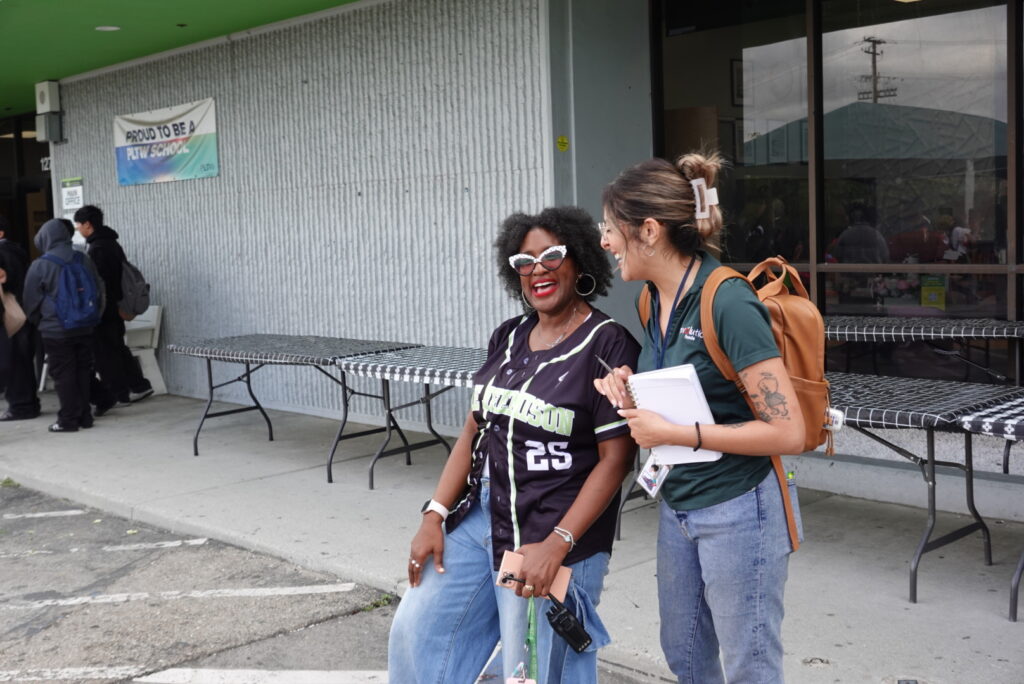
This National School Breakfast Week, schools nationwide are recognizing that breakfast isn’t just a meal—it’s a foundation for learning. When Ánimo Mae Jemison Charter Middle School moved breakfast into every classroom, participation skyrocketed from 16% to 89%. Here’s how Principal Dr. Melissa Russell and Revolution Foods partnered to make it happen—and how your school can achieve similar results.
At Ánimo Mae Jemison Charter Middle School in Los Angeles, Principal Dr. Melissa Russell had a problem: Students weren’t eating breakfast, and throughout the day, the constant refrain of “Do you have a snack?” echoed through the hallways.
“We were offering breakfast before school using a grab-and-go system, and students just weren’t grabbing it,” said Dr. Russell. “Students were asking for food throughout the day, and we knew we needed to make a change.”
The solution? Moving breakfast into every classroom. But getting there meant addressing real teacher concerns head-on.
The Pushback: What Teachers Were Worried About
When Dr. Russell first proposed breakfast in the classroom, the response was resistant:
“This is going to be a distraction. I’ll lose instructional time!”
Teachers worried about losing precious learning minutes to breakfast distribution.
“My classroom is going to be covered in crumbs and trash!”
The vision of sticky desks, food waste, and extra cleanup made teachers anxious.
“Great, another thing I have to manage and track!”
Teachers already juggling full plates saw breakfast as yet another administrative burden.
These weren’t trivial complaints—they were legitimate operational concerns that could sink the program.
How Ánimo Mae Jemison Addressed Each Concern
Dr. Russell and her team built solutions into the system design.
Concern #1: Loss of Instructional Time
The Solution: Kitchen staff deliver pre-packed breakfast bags to every classroom ready for when students arrive.
What Dr. Russell told teachers: “Breakfast happens while instruction is starting, not instead of it. Students can eat while you’re taking attendance or starting a warm-up. You’re not losing time—you’re gaining students who can focus.”
The reality: Teachers found breakfast actually improved the start of class. Students arrived calmer and more ready to engage. “In the mornings, we get about 40% of kids grabbing breakfast right away,” Dr. Russell reported. “But throughout the morning, almost every student participates.”
Concern #2: Crumbs, Spills, and Cleanup
The Solution: Every classroom received a dedicated breakfast trash bin. Kitchen staff return to collect breakfast bags and uneaten perishable food.
What Dr. Russell told teachers: “We’ll make it as seamless as possible with easy grab and go options and dedicated trash and leftover bins. Kitchen staff handle pickup.”
Teacher flexibility made it work: Some teachers kept breakfast and trash bins outside classroom doors. Others set specific pickup times. “The teachers actually helped make the system work even better,” Dr. Russell said.
The reality: Spillage was less of an issue than anticipated. Students used the bins, and teachers didn’t report significant cleanup increases.
Concern #3: Another Thing to Track and Manage
The Solution: Make participation tracking so easy that the students can manage it on a simple weekly chart.
What Dr. Russell told teachers: “You’re not counting or ordering. You just make breakfast available and show students how to log their participation.”
Teacher autonomy was key: Teachers chose how to distribute—the flexibility reduced friction.
The reality: Teachers adapted the system to their preferences without added administrative burden.
The Results: 16% to 89% Participation
Before: 16% of students ate breakfast After: 89% of students eat breakfast
“We don’t hear ‘I’m hungry’ a lot anymore,” Dr. Russell said. “That used to be the go-to language. I don’t hear that anymore because the food is out there.”
Teachers who were initially skeptical became advocates once they saw students arriving fed and ready to learn.
Strategic Advice: How to Overcome Resistance
1. Plan the System in Detail BEFORE You Present It
“Make sure you have a clear plan before you introduce it to staff,” Dr. Russell advised. “We spent time talking through ‘What about this?’ So make sure you’re planning it out first.”
Tactical tip: Anticipate every objection. Have answers ready for trash, mess, time, tracking, and logistics before the staff meeting.
2. Partner With Your Food Service Provider
“Working with Revolution Foods was really helpful,” Dr. Russell said. “They showed us examples from previous schools and helped us create a plan that worked for our school.”
Tactical tip: Ask your provider what’s worked elsewhere and how other schools addressed common concerns. Bring those solutions to your staff.
3. Listen to Feedback—And Make Adjustments
“When you’re introducing something new, it comes with concerns,” Dr. Russell acknowledged. “Just be open to hearing what people have to say and make adjustments as necessary.”
Tactical tip: After the first week, ask teachers what’s working and what’s not. Make visible changes—it builds trust.
The Bottom Line
Breakfast in the classroom isn’t just a logistical shift—it’s a cultural one. Teachers’ concerns about time, mess, trash, and workload are legitimate. Ignoring them will doom the program.
But when schools proactively design systems that minimize teacher burden—pre-delivered meals, dedicated bins, daily pickup, teacher autonomy—resistance melts away.
At Ánimo Mae Jemison, breakfast in the classroom has become seamless. “It’s just part of AMJ now,” Dr. Russell said. “It’s part of what we do.”
For schools hesitant about operational challenges, the lesson is clear: plan strategically, partner with your food service provider, address teacher concerns directly, and execute decisively.
As Dr. Russell put it, “We want to make sure students are nourished so their brains can function in class. This program makes that possible.”
Ready to transform breakfast participation at your school? Revolution Foods can help you design a system that works for your teachers, your students, and your operations. Contact us to get started.