

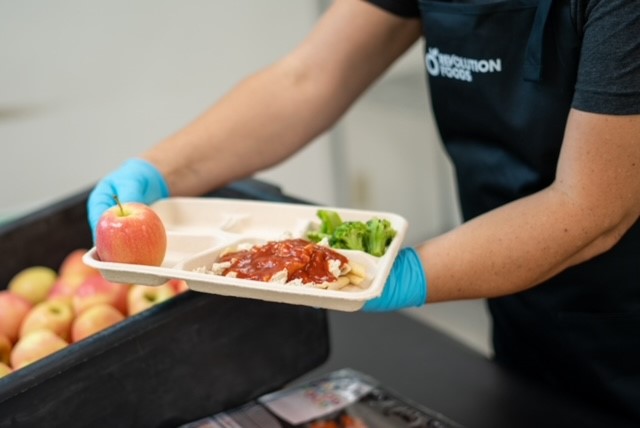
The Old Model: Take It or Leave It
Remember when grabbing lunch meant your only option was a pre-wrapped burrito from the hot case? You were hungry, so you ate it. For years, school meal service worked the same way: one vendor, one menu, one delivery model. Schools needed compliant meal programs, so they took what was available.
That was the reality when Revolution Foods was smaller—one model, and schools either fit it or they didn’t.
The Shift in Conversations
The question used to be, “Here’s what we do—does it work for you?” Now it’s, “What’s your situation? What are you trying to solve?”
As Revolution Foods expanded, something unexpected happened. Instead of standardizing further, the company gained the ability to customize. Think about how you order at a modern counter-service restaurant—bowl or wrap, this grain or that one. Scale created options. And options meant schools no longer had to fit into a single system.
What Different Actually Looks Like
Some schools have kitchens with ovens and warmers but no scratch-cooking program. Others—especially many charters and newer campuses—have almost no kitchen infrastructure at all. Some have space and equipment but struggle with staffing. And all face the same requirement: USDA compliance. These realities shaped a different approach.
The Service Spectrum
What emerged wasn’t a single solution but a range of them:
- Full-service vended programs that manage everything—kitchen operations, staffing, compliance.
- Hot-delivery models for schools without equipment or cafeteria space.
- Heat-on-site options for campuses that can reheat but not cook from scratch.
- Staffing support that can stand alone or pair with any model.
None are “better” than another. They’re simply the right fit for different circumstances.
Why This Matters Beyond the Lunch Line
Meal service flexibility is really about removing barriers. When a school can’t open because there’s no kitchen, that’s a barrier to education. When administrators spend hours managing compliance instead of supporting teachers, that’s a barrier to their real work. Customization keeps the focus on students and learning—not logistics.
How Scale Creates Options
Growth didn’t make Revolution Foods more rigid; it made more solutions possible. Multiple kitchen facilities open new delivery routes. Specialized teams support different models. Investment in infrastructure means quality stays consistent no matter how meals arrive.
What Hasn’t Changed
USDA compliance, quality standards, and the commitment to feeding students well remain constant. What’s changed is recognizing that “feeding students well” can look different depending on the kitchen, the campus, or the team you have.
Where Revolution Foods Fits In
Revolution Foods has grown into a partner that can meet schools where they are—whether that means managing Food Service Management Contracts, delivering meals hot and ready to serve, supporting heat-on-site models, or providing staffing solutions. The goal is the same in every case: make nutritious, compliant meals accessible, and support schools in focusing on what matters most—students.