

As chefs, we spend a lot of time talking about food. Sometimes it sounds very scientific, and sometimes it sounds like, “I don’t know, it just needs a little something.”
Believe it or not, both approaches have their place. But when you’re serving thousands of chef-crafted school meals every day, “a little something” isn’t exactly a measurable quality standard.
That’s where organoleptic testing comes in.
What Is Organoleptic Testing?
“Organoleptic” is simply a fancy culinary term for using our senses to evaluate food. At Revolution Foods, we assess key attributes such as appearance, aroma, flavor, texture, and overall acceptability to ensure every meal we serve meets our quality standards.
It’s a method borrowed from food science labs and applied to real school cafeterias, where the questions aren’t abstract — they’re immediate: Will a third grader actually eat this? Does the sauce still taste balanced after 45 minutes on a hot-hold line? Did that new whole-grain roll turn out the way we intended?
How We Put It Into Practice
Every day, our culinary team evaluates meals the same way our students experience them — not in a sterile test kitchen, but under the same conditions the food will actually be served in. We look at whether food remains visually appealing, whether flavors are balanced, whether textures hold up as intended, and whether the overall eating experience meets expectations.
Right now, our mac ‘n cheese is a great example of this in action. It’s a menu staple that lives or dies on a handful of sensory details: Is the cheese sauce still creamy and cohesive, or has it started to break and turn oily after sitting in a hot-hold line? Does the pasta hold its shape and bite, or does it turn mushy in transit? Is the flavor rounded and cheesy, or does it flatten out under heat? These are exactly the kinds of questions a nutrition panel can’t answer, but a trained palate — tasting the meal the way a student actually would, after it’s gone through real production and holding conditions — is built to catch.
That’s the value of testing it the way students experience it, not straight out of a test kitchen pot. A recipe that tastes great in a small batch can behave completely differently once it’s produced at scale and held for service, so we evaluate it under those same real-world conditions before it ever reaches a cafeteria tray broadly.
We document every evaluation using a standardized scoring system, which allows us to track performance over time, compare recipes side by side, and identify opportunities for improvement before a meal ever reaches a cafeteria tray at scale.
From Subjective to Actionable
One of the things I enjoy most about this process is that it helps transform what is often considered subjective into something much more actionable. Everyone has personal preferences — that’s human nature. But a structured sensory evaluation allows us to consistently measure quality and make informed decisions about recipes, ingredients, and processes, rather than relying on gut feeling alone.
These evaluations help us answer the questions that matter most for a large-scale school meal program:
- Is the product performing consistently, batch after batch and site after site?
- Does it still taste great after holding, transport, or reheating?
- Are there opportunities to improve flavor, texture, or aroma?
- Will students actually enjoy eating it — not just meet a nutrition checklist?
Why Sensory Quality Matters as Much as Nutrition
As Kristian puts it, the goal is never to make healthy food taste merely acceptable — the goal is to make healthy food taste great. That distinction drives everything about how we approach recipe development and testing.
At the end of the day, our goal isn’t just to serve meals that meet nutrition standards. We want to serve meals that students are genuinely excited to eat. A meal can check every box nutritionally, but if students aren’t enjoying it, we’re missing an important opportunity — and, just as importantly, that food often ends up in the trash instead of in a student’s stomach.
That’s why we put so much focus on both nutrition and the eating experience. Organoleptic evaluations help ensure our chef-crafted school meals aren’t only good for students, but meals that students think are actually good, period.
Consistent sensory testing is also part of what separates a true chef-driven school meal program from a standard institutional food service. It’s the difference between a menu built around compliance minimums and a menu built by culinary professionals who treat student food service with the same rigor as any other kitchen — because kids deserve that same standard.
And as any chef will tell you, that’s a pretty delicious goal.
Revolution Foods combines chef-crafted recipes with rigorous organoleptic testing and quality standards to deliver healthy, great-tasting school meals that support student nutrition programs nationwide.
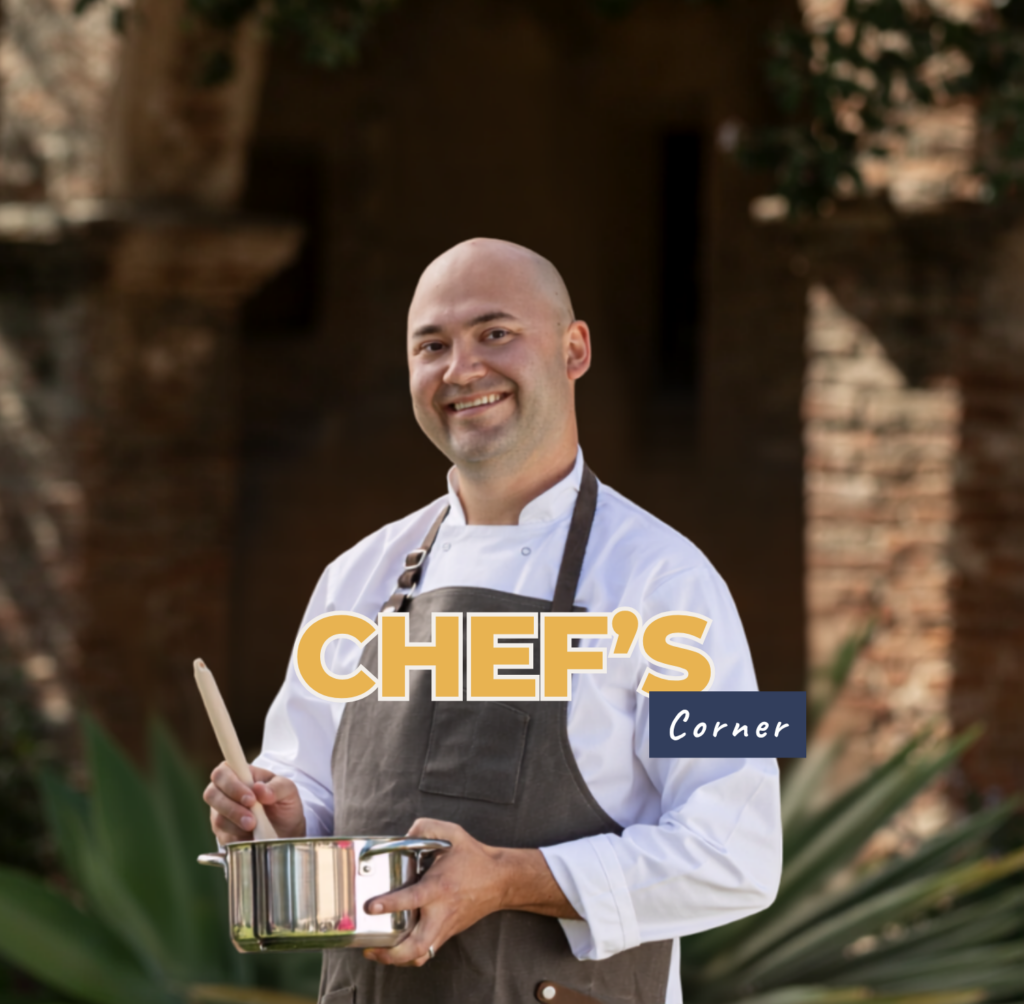
About the Chef: Kristian Henry brings a culinary background rooted in French and Japanese cuisine, with early experience in fine dining kitchens that shaped his focus on technique, flavor development, and ingredient quality. His career has since expanded into culinary nutrition and large-scale product innovation, translating chef-driven ideas into meals that are both craveable and operationally successful at scale. At Revolution Foods, Kristian leads recipe and quality initiatives across the menu, with one guiding philosophy: the goal isn’t to make healthy food taste acceptable — it’s to make healthy food taste great.